
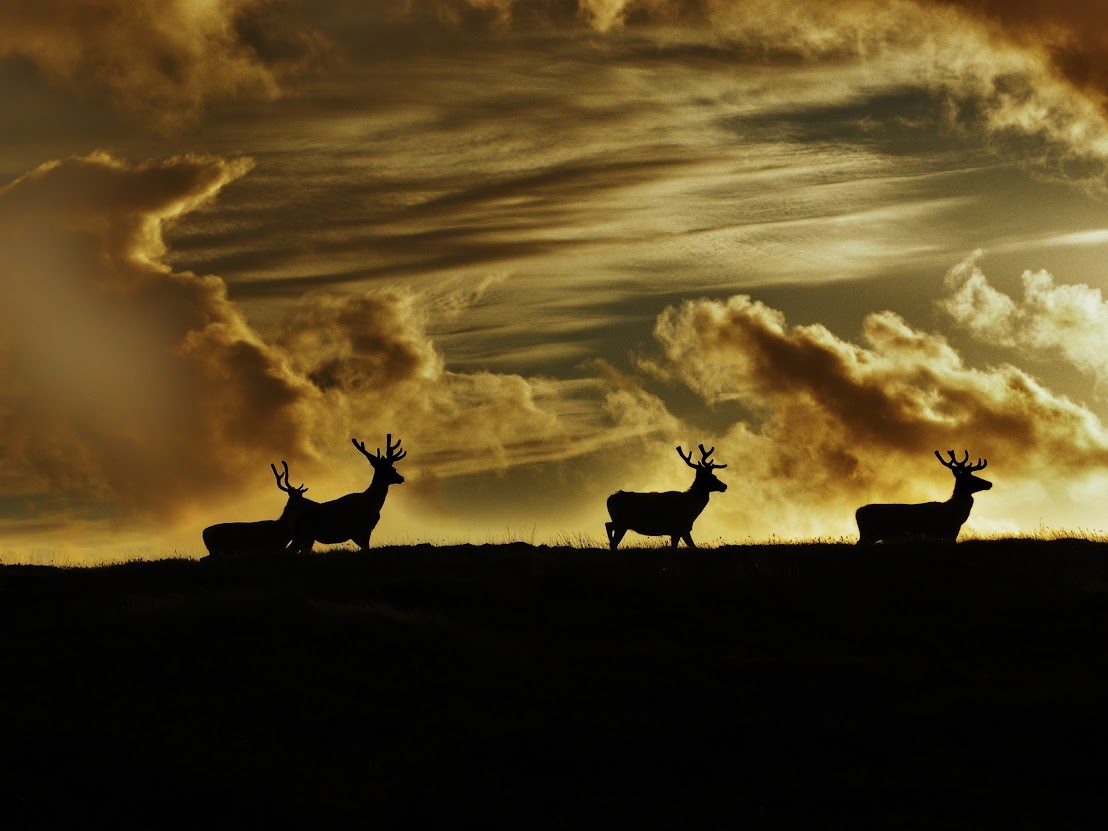
Why are there so many deer in Ness and what is being done about it?
12 Jun 2026
by Christine Amos
Many residents have noticed an increasing number of deer around Ness and are understandably concerned about the impact they are having on gardens, crofts and local green spaces. So, why are the deer here? Traditionally, sheep grazing on the moor helped maintain areas of fresh grass that deer would feed on. With fewer sheep now grazing these areas, the moor is producing less of the fresh, nutritious grass that deer prefer. As a result, deer are increasingly moving off the moor in search of food, finding attractive feeding opportunities in crofts, gardens and improved grassland around the village.
Urras Oighreachd Ghabhsainn (UOG) recognises the challenges that increasing deer numbers in and around villages can present and is taking practical steps to manage the situation responsibly and sustainably. But what does this actually mean? And what are the practical steps that UOG have been taking?
TAKING ADVICE FROM NATURESCOT
UOG works closely with NatureScot, which provides expert advice and support on deer management. Following a deer count carried out in 2022, NatureScot set a target of 100 deer per year to be culled on the estate. Thanks to the hard work and dedication of our volunteer stalkers, this target has been exceeded during each of the last two stalking seasons with 108 culled in 2025 and 134 culled in 2026. This is no easy task for our volunteers. The flat moorland makes stalking very challenging as the deer can see the stalkers coming from miles away.
WORKING CLOSELY WITH LOCAL STAKEHOLDERS
UOG is a member of the Lewis and Harris Deer Management Group. Through this partnership, deer are managed on a collective basis across estate boundaries in accordance with Scottish Government policy, the Code of Practice on Deer Management and Wild Deer Best Practice Guidance. The group's vision is to maintain a healthy deer population at a density that keeps habitats in good condition, minimises impacts on crofting and public interests, supports local employment and contributes positively to the local economy and environment.
We also meet regularly with our estate neighbours Stornoway Trust and Barvas Estate Trust as we are all managing the same herds due to deer migration.
A CHILLER TRAILER FOR THE SUMMER MONTHS
Working in partnership with NatureScot, a chiller trailer will be available during the summer months this year to support deer management efforts. This will allow stalking to begin earlier in the season, with carcasses stored safely and kept cool after harvesting. Without access to a chiller, stalking cannot start until the autumn.
EXPLORING A LOCAL DEER PROCESSING FACILITY
The Trust is undertaking a feasibility study to determine whether a local deer processing facility would be suitable for the area. Such a facility could help ensure that venison is processed efficiently and used locally, supporting both sustainable deer management and local food production. Residents will soon be asked to complete a survey asking about venison consumption and local demand. We encourage everyone to take part, as community feedback will help shape future decisions.
ARE DEER A DANGER TO DOGS?
We are occasionally asked about the risks deer pose to dogs. It is extremely rare for a dog to be attacked by a deer, but care should be taken particularly during the rutting season or when hinds are protecting calves. There are many reports however, that dogs chasing or attacking deer is common. Therefore, dog owners are encouraged to keep dogs under close control around deer, particularly during the spring and autumn months, both for the safety of their pets and to avoid causing unnecessary stress or injury to wildlife.
WHAT THE TRUST CANNOT DO
While we understand the frustration caused by deer in and around the village, there are important limitations on what can safely and responsibly be done.
Shooting Within Villages
Our volunteer stalkers cannot shoot deer within villages or heavily populated areas, and it is not fair for us to ask them. Safety must always come first. The risks involved are significant, and the consequences of an accident involving livestock, property or people would be unacceptable. Crofters are within their rights to ask stalkers to shoot deer on their croft but would also need the permission of UOG.
Chase the deer from your property
Unfortunately, UOG staff and volunteer stalkers are unable to attend private properties to drive deer away. If deer are chased onto a road and a collision occurs, the person responsible for chasing the deer could potentially be held liable for causing the accident.
For this reason, UOG recommends using loud noises to deter deer from lingering around your property, rather than actively chasing them away.
Wasting Harvested Deer
Simply removing deer without making use of the carcasses is not an option. Deer management must be carried out sustainably and ethically, ensuring that harvested animals are used responsibly and do not go to waste. Venison is a valuable local food resource and should be treated as such.
WHAT CAN RESIDENTS DO?
Deer are an important part of our natural environment, but growing numbers can create real challenges for communities and land managers alike. By working together, supporting responsible deer management and taking practical measures to protect vulnerable areas, we can help reduce the impact while ensuring that deer are managed safely, ethically and sustainably for future generations.
Managing deer numbers is a community-wide challenge, and there are practical steps residents can take to help.
Protect Gardens and Crofts
Installing deer fencing remains one of the most effective ways to prevent damage to gardens, vegetable plots and young trees.
Report Accidents
We urge anyone who is involved in a road traffic accident with a deer to report the accident to UOG. UOG reports the accident to the Deer Management Group which collates this information for NatureScot and Police Scotland. This data supports UOG to access night-stalking licences and out-of-season licences.
Become Part of the Solution
If you are interested in contributing to local deer management, consider attending a deer-stalking training course and obtaining the necessary firearms certification. Increasing the number of trained and qualified local stalkers can help support long-term, sustainable deer management across the area.
MANAGING EXPECTATIONS
It is important to understand that the aim of deer management is not to remove all deer from the estate. Deer naturally move between neighbouring estates, and it would neither be practical nor desirable to eliminate them entirely.
The goal is to maintain deer numbers at a sustainable level that balances the needs of the environment, crofting interests, public safety and animal welfare. Through ongoing management and collaboration with neighbouring estates, UOG aims to maintain a healthy deer population while reducing the impacts that excessive numbers can have on local communities and habitats.